Fat cells can secrete a senescence promoter, study finds
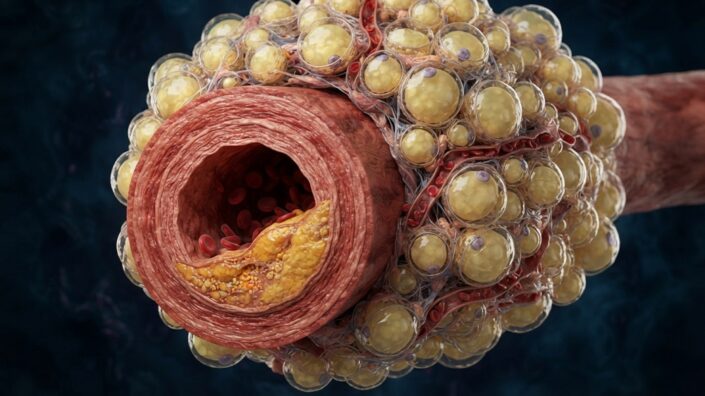
Researchers report that aging fat cells can secrete asprosin, a hormone that damages mitochondria in blood-vessel lining cells, activates STING signaling, and drives cellular senescence. In mice, blocking or removing asprosin eased senescence markers and vascular aging—pointing to a potential, still-experimental target for healthier vessels.
Key Takeaways
- Aging fat cells increasingly release asprosin, tied to mitochondrial damage and senescence in endothelial cells.
- In mice, an anti-asprosin antibody or genetic asprosin loss cut senescence biomarkers and vessel-wall thickening after accelerated aging.
- Asprosin drives mtDNA leakage and STING activation; scavenging mitochondrial ROS with mitoTEMPO blunted many cellular effects.
- Researchers caution that the full aging-asprosin link remains unclear and any therapy would need testing beside standard vascular care.
What did the study find about fat-derived asprosin?
According to reporting from Lifespan.io, a research team linked asprosin—produced by aging fat cells—to mitochondrial dysfunction and cellular senescence in the endothelial cells that line blood vessels.
Asprosin rose with senescence in human endothelial cells and with aging in wild-type mice. That matters for longevity because senescence-associated signals circulating in blood readily reach vessel walls, where they can fuel vascular aging—a core theme in longevity and biohacking research.
How can fat cells secrete signals that age blood vessels?
In cell work, asprosin damaged mitochondrial membranes and caused fragmentation, much like hydrogen peroxide. The hormone prompted mitochondrial DNA to leak into the cytosol, activating STING; knocking down STING blocked the resulting senescence.
Rising mitochondrial reactive oxygen species tracked with that mtDNA leak. Treating cells with mitoTEMPO, which scavenges those ROS, reduced leakage and senescence while restoring proliferation. Conditioned media from adipocytes that could not make asprosin was far kinder to endothelial cells, blunting hydrogen peroxide–driven senescence and improving proliferation and migration.
Can blocking asprosin ease vascular aging in mice?
Mice rapidly aged with D-galactose and then given an anti-asprosin antibody (AASP) showed lower senescence biomarkers and inflammatory cytokines. Injecting asprosin alone pushed those markers roughly as high as D-galactose did. Both D-galactose and asprosin thickened vessel walls and raised systolic blood pressure, though AASP did not reverse every dilation problem caused by D-galactose.
Mice unable to produce asprosin, then stressed with D-galactose, also had fewer inflammatory and senescence markers, plus less vessel thickening and collagen buildup, versus D-galactose alone. The authors note they have not mapped the full path from aging drivers to rising asprosin, and they are unsure whether targeting it would beat current vascular treatments—so any future approach should be tested alongside standard care.