Engels2 fire and deep drones hit Russia's logistics hubs
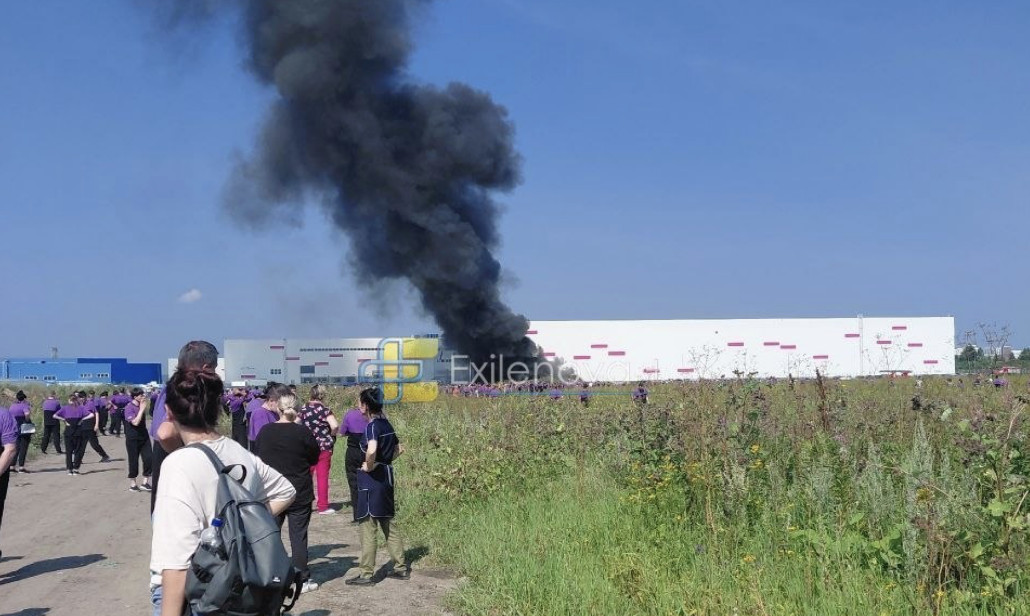
A suspected Russian military unit near the Engels2 strategic bomber airbase caught fire overnight July 24–25 as drones also struck a Wildberries warehouse in Yekaterinburg about 1,080 miles from Ukraine. Moscow said it intercepted 328 UAVs across 22 regions, underscoring a widening deep-strike campaign.
Key Takeaways
- A large fire hit a building on Engels-1 Street near the Engels2 airfield in Russia's Saratov region; OSINT and local reports link it to a military unit, though the cause is not officially confirmed.
- A drone strike damaged a Wildberries logistics warehouse in Yekaterinburg roughly 1,080 miles from the Ukrainian border.
- Russia's Defense Ministry claimed air defenses downed 328 Ukrainian UAVs between 8:00 p.m. Friday and 8:00 a.m. Saturday across 22 regions, Crimea, and the Sea of Azov.
- Engels2 was hit on July 16; satellite imagery later showed a Tu-95MS strategic bomber destroyed there.
- Wildberries has faced a run of warehouse hits; prior damage had already disabled about 8% of its warehouse capacity.
The overnight wave of alerts and fires from Friday evening into Saturday morning, July 25, stretched from western Russia deep into the Urals. Reporting from Kyiv Post and Russian monitoring channels described concurrent incidents at Engels and at commercial logistics sites far from the front.
Readers tracking how geopolitical shocks ripple into markets and household budgets can also browse BlasterPost's Wealth Hacks & Passive Income hub for related explainers.
What happened near Engels2 overnight?
In the Saratov region, residents reported a large fire in the city of Engels after regional drone and missile threat alerts. According to the Astra Telegram channel, citing OSINT analysis, the blaze was at a building on Engels-1 Street that is believed to house a military unit.
That structure sits close to the Engels2 military airfield, a primary hub for Russia's strategic aviation. Local authorities have not officially confirmed what started the fire. Some residents said they did not hear explosions before the blaze.
Ukrainska Pravda, carried via Yahoo News, likewise reported that military barracks were burning in Engels after drone activity on the night of July 24–25, with eyewitness footage of thick smoke and flames. Monitoring channels also flagged a large fire in Rostov and strikes on temporarily occupied Luhansk, where explosions and a fire were reported.
Why does the Engels2 airbase matter strategically?
Engels2 is central to Russia's long-range bomber force. On July 16, Ukrainian long-range drones struck the airfield—about 500 miles from the border, according to Ukraine's Security Service (SBU). Kyiv said the raid hit strategic aviation that Moscow uses for missile strikes inside Ukraine.
Planet Labs satellite imagery dated July 19, highlighted by Newsweek and imagery analysts, appeared to confirm the loss: the tail section of a Tupolev Tu-95MS bomber parked at Engels2 looked torn off. AviVector described the tail as completely destroyed and beyond repair.
The Tu-95 is a Soviet-era strategic missile carrier that can carry up to six cruise missiles, with a maximum range of about 8,000 miles and a unit cost cited above $26 million. Manufacturing of Tu-95 airframes ended in 1992, so each loss permanently shrinks a scarce fleet. The SBU framed every eliminated bomber as missiles that will not be launched at Ukrainian cities.
Oryx, which documents visually confirmed losses, has recorded 11 Tu-95MS bombers lost since the full-scale invasion began. The July 25 fire near Engels2 therefore lands on an airbase already under proven Ukrainian reach—even if the overnight blaze's cause remains unverified by Russian officials.
How far did the Yekaterinburg Wildberries strike reach?
Alongside Engels, the overnight barrage included a deep strike on logistics infrastructure. The Exilenova+ monitoring channel reported a drone hit on a Wildberries warehouse in Yekaterinburg, about 1,080 miles from the Ukrainian border. Footage showed a large column of smoke over the facility. The precise extent of damage had not yet been established in initial reporting.
That attack fits a broader campaign against Wildberries, Russia's largest e-commerce retailer. On Friday, drones struck infrastructure in St. Petersburg: a Wildberries warehouse in Novosaratovka, where three people were injured, and a logistics center in Shushary that was evacuated before a fire broke out. The company also suspended operations at a sorting center in occupied Simferopol after reported drone activity.
Earlier hits included a distribution center in the Voronezh region and an attempted strike in Kazan. Previous damage to facilities in Elektrostal, Kotovsk, Krasnodar, and Nevinnomyssk had already disabled roughly 8% of the company's total warehouse capacity, according to Kyiv Post's accounting of the campaign.
What did Russia say about the wider drone wave?
Moscow cast the night as a mass interception effort. The Russian Defense Ministry said its air defenses intercepted and destroyed 328 Ukrainian unmanned aerial vehicles between 8:00 p.m. Friday and 8:00 a.m. Saturday local time.
According to the ministry, drones were intercepted over 22 regions—including Belgorod, Bryansk, Volgograd, Voronezh, Kursk, Lipetsk, Rostov, Ryazan, Saratov, and the Moscow region—plus the Crimean peninsula and the Sea of Azov. Aviation authorities temporarily closed Moscow's Domodedovo Airport for about 30 minutes on Friday evening before lifting restrictions.
Independent of Russian claims, the pattern reported by Ukrainian, Russian, and Western outlets is clear: alerts and fires spanned military-linked sites near Engels2, commercial warehouses deep inland, and other cities the same night. Cause attribution for every blaze is not equal—some military-area fires lack official confirmation—while the Yekaterinburg and St. Petersburg Wildberries hits are described as drone strikes by monitoring channels and subsequent coverage.
For now, the verified through-line is escalation of range and target mix. Engels2 remains a high-value aviation node already proven vulnerable in mid-July. Commercial logistics hubs hundreds of miles from Ukraine are being hit in the same operational window. Until Russian authorities publish forensic findings on the Engels-1 Street fire, the safest summary is the one the sources support: a military-area blaze next to Engels2, concurrent deep logistics strikes, and a claimed nationwide UAV interception tally in the hundreds.