Cairngorms fire flares up again as public urged away
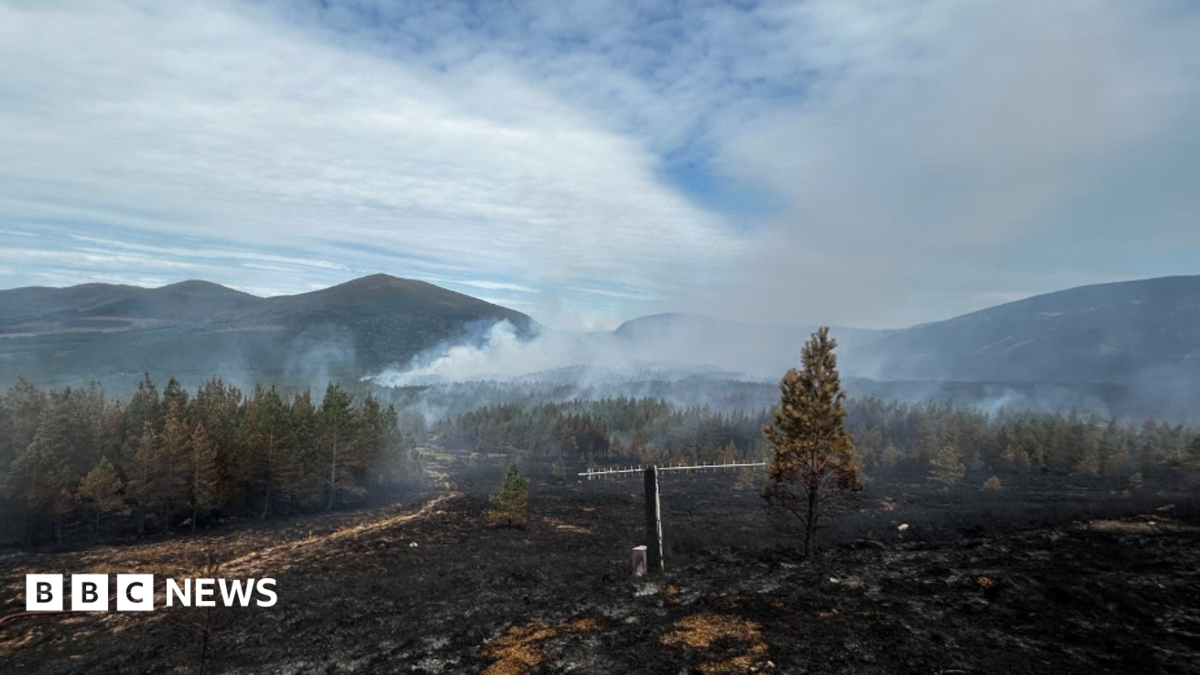
The Cairngorms fire saw a major flare-up more than a week after it started near Ryvoan Bothy, with emergency services urging the public to stay out of closed areas. More than 100 firefighters have tackled the blaze across challenging terrain, while hotspots, strong winds and a very high wildfire risk warning keep the situation dynamic.
Reports from residents and officials describe another surge in flames and smoke around Glenmore and Abernethy, even as crews keep working on land and from the air. The Scottish Fire and Rescue Service (SFRS) says people are still trying to enter the exclusion zone despite road closures, signage and police cordons.
Key Takeaways
- The blaze began near Ryvoan Bothy, south of Nethy Bridge, and has drawn more than 100 firefighters, with hotspots still burning across difficult ground.
- A major flare-up followed a wind change; smoke has been reported more than 20 miles away in Ballater, where residents were told to close windows and doors.
- Paths around Glenmore, Loch Morlich, Badaguish and other routes remain closed; Aviemore and other parts of the national park are still welcoming visitors.
- Helicopter water-bombing continues, but SFRS does not own firefighting helicopters and must call in specialist commercial aircraft when approved.
- A very high wildfire risk warning remains for the central Highlands plus eastern and southern Scotland until Friday.
What happened in the latest Cairngorms fire flare-up?
According to the BBC, the wildfire started last Wednesday near Ryvoan Bothy and has burned across about 10 square kilometres. Local residents reported another major flare-up, and Nethy Bridge community council leader Sandy McCook said the fire had flared again, leaving crews “back to square one.”
STV News reported smoke billowing from the hillside in Abernethy late on Thursday afternoon. Residents said conditions worsened overnight after the wind changed direction. McCook told STV the fire was blowing into Strathnethy, covering ground and endangering areas that had not yet burned.
SFRS sent crews from eleven appliances to Glenmore on Friday, including a command support unit and wildfire units, before that presence was reduced to six appliances. Gamekeepers helping fight the fire were stood down because strong winds made the scene too dangerous, STV reported.
Deputy Assistant Chief Officer Michael Humphreys said progress was being made, but wildfires can change rapidly. Wind strength and direction keep shifting smoke and sparking flare-ups, he added, while tactical advisors monitor the scene.
Why are people still being told to stay away?
Emergency services say substantial hotspots remain across a large, complex landscape. SFRS has asked the public to keep clear while operations continue, including helicopter water-bombing and ground work expected to run into next week.
Closed and restricted areas include paths around Glenmore, Loch Morlich and Badaguish; low-level routes such as the Old Logging Way; and access toward Cairngorm Mountain, the Northern Corries, Meall A’ Bhuachaille, the Green Loch (Lochan Uaine), Strath Nethy or Bynack More. Paths in Abernethy Forest south of Forest Lodge toward Ryvoan Bothy also stay shut.
Police Scotland said exclusion zones remain under continued review. Even so, crews still receive reports of people trying to get in. Highland Council convener Bill Lobban called the damage heartbreaking and urged people to heed emergency warnings.
Colin Simpson of the Cairngorms National Park Authority said it had been difficult for those who love Glenmore to watch the week unfold. He noted that nearby destinations such as Aviemore are still open as usual, with other attractions across the 1,748-square-mile (4,527 sq km) park available to explore.
People in Ballater, more than 20 miles away in west Aberdeenshire, reported smelling and seeing smoke. They were urged to keep windows and doors closed as a precaution. For wider BlasterPost reading beyond this breaking story, see our Wealth Hacks & Passive Income category hub.
Do helicopters change the fight against this wildfire?
Park officials have described two specialist helicopters as invaluable for waterbombing hard-to-reach ground. RSPB Scotland called a helicopter’s arrival a “game changer” at its Loch Garten reserve. Yet a separate BBC investigation found the landscape burned for nearly two days before those aircraft arrived around Glenmore Forest Park.
Unlike engines and all-terrain vehicles, SFRS has no direct access to firefighting helicopters. Only a small number of private firms have the kit and pilots. Aircraft can be requested only after the incident commander approves them and landowners have contractual arrangements to cover costs.
Commercial operator Skyhook, based at Fife Airport in Glenrothes, has led aerial work on this blaze. Its helicopters can use “Bambi Buckets” carrying up to 1,000 litres, scooping roughly a tonne of water from nearby lochs for repeated drops. The firm says it often gets requests hours after a fire has taken hold and is not funded to keep dedicated wildfire crews on permanent standby.
Sandy McCook argued that after last year’s Dava Moor megafire—which burned more than 11,000 hectares—lessons on helicopter mobilisation had not been learned. Lib Dem MSP Andrew Baxter said both Scottish and UK governments should have publicly available firefighting aircraft in wildfire season. Justice Secretary Neil Gray told the BBC that fire chiefs say they have the resources needed to contain the Cairngorms blaze, while remaining open to discussing innovations if requested.
Humphreys stressed that aerial support helps but is not always essential, and ground plans account for when helicopters are unavailable. McCook told STV that full aerial support—and rain—remain crucial, noting that people fighting the fire have been exhausted after working around the clock since the blaze began.
As of the latest reporting, intensive firefighting on land and in the air continues at hotspots. Officials ask walkers, visitors and local residents to read safety advice, avoid Glenmore, Abernethy and Loch Morlich, and let crews work. The very high wildfire risk warning for the central Highlands, eastern Scotland and southern Scotland has been extended until Friday.