Bitcoin retakes $65,000 as oil slides and ETH outperforms
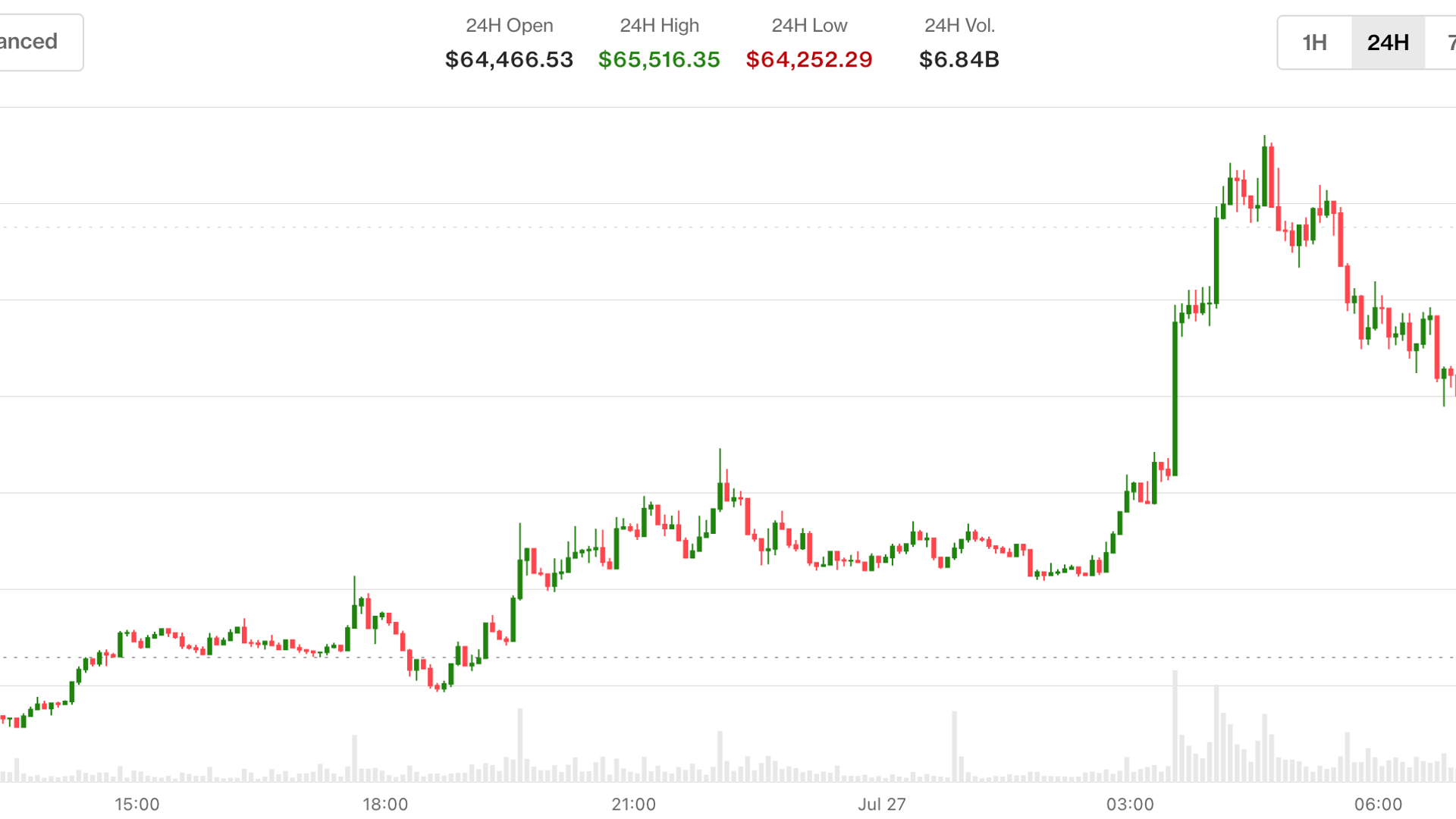
Bitcoin price usd is back above $65,000 after U.S. and Iran held fire, easing risk sentiment as oil slid. The move matters because it aligns BTC with macro “peace trade” expectations, while ETH is outperforming BTC, hinting at rotation toward larger altcoins.
Key Takeaways
- Bitcoin price usd reclaimed $65,000 as oil fell on renewed U.S.-Iran hold-fire headlines.
- ETH outperformed BTC, rising over 3% to nearly $1,950 as rotation signals showed selectivity.
- Earlier weakness near $64,000 was tied to weakening stablecoin inflows on crypto exchanges.
- Binance Research points to macro and liquidity conditions as major drivers of BTC’s broader trend.
Why is bitcoin price usd back above $65,000 today?
CoinDesk reports that bitcoin price usd moved back above $65,000 as U.S. and Iran held fire, keeping investors focused on “peace” developments. CoinDesk also said BTC was up about 1.2% over 24 hours, with the token trading around $65,502. CoinDesk linked the move to broader macro signals, including oil slipping alongside the geopolitical tone.
CoinDesk further highlighted that ETH is leading the action. Ether rose by over 3% to nearly $1,950, while other top 10 tokens including SOL and XRP were also in the green. Even with that relative strength, CoinDesk noted BTC dominance at 58.6%, suggesting the shift wasn’t yet a broad-based altcoin rally.
How did oil slide and geopolitics change the crypto mood?
CoinDesk tied the renewed risk-on mood to the U.S. and Iran pausing military strikes for a second consecutive day. It also pointed to crude weakness: Brent crude fell about 4.7% to $92.19, and futures tied to WTI traded around 5% lower near $85 at the time of writing. The market takeaway was that easing tension reduced pressure that had been supported by war-driven pricing.
Investing.com echoed the macro linkage, noting that oil was diving more than 6% as easing U.S.-Iran tensions erased war-driven gains. With BTC responding to the same impulse, traders are effectively treating this as a macro-driven tape rather than a purely crypto-internal story.
What do stablecoin inflows say about demand for BTC?
Notably, Investing.com previously placed bitcoin price usd closer to $64,000, describing price action that looked more cautious. The report attributed the softer tone to weakening stablecoin inflows, which it said pointed to subdued demand for crypto assets. Investing.com said stablecoin transfers to exchanges had fallen to their lowest level since 2025, citing CryptoQuant analyst Darkfost.
Investing.com also provided Ethereum-linked flow context: the 30-day average inflow of USDT and USDC on Ethereum was about $2.3 billion, below a 365-day average of $3.7 billion. It added that lower inflows suggest investors are moving less readily deployable capital to trading platforms, and that stablecoin flow peaks can lag demand acceleration.
Why is ETH outperforming BTC instead of a broad altcoin surge?
CoinDesk’s market framing is that ETH’s relative strength may be signaling rotation into alternatives, while BTC’s dominance shows selectivity remains. In other words, the upside isn’t yet described as a full “alt season” across the board—just stronger relative performance for ETH.
That comes against a backdrop where Binance Research, as summarized by CryptoPotato, describes BTC’s earlier drawdown as largely macro-driven. CryptoPotato said Binance Research reported BTC ended the first half of 2026 near $60,000 after falling about 32% since January, and that the report attributed weakness mainly to broader macro conditions rather than crypto-specific developments. The same summary highlighted stress signals such as the first loss-over-profit crossover in the current cycle and referenced U.S. spot Bitcoin ETF net outflows during the first half.
For continuing coverage and market alerts, check the Fintech & Crypto Alerts category hub.
Source reporting includes CoinDesk on the move back above $65,000 and ETH outperformance: CoinDesk, plus stablecoin-flow context from Investing.com.