Severe storms trigger flash flood warnings in metro Atlanta
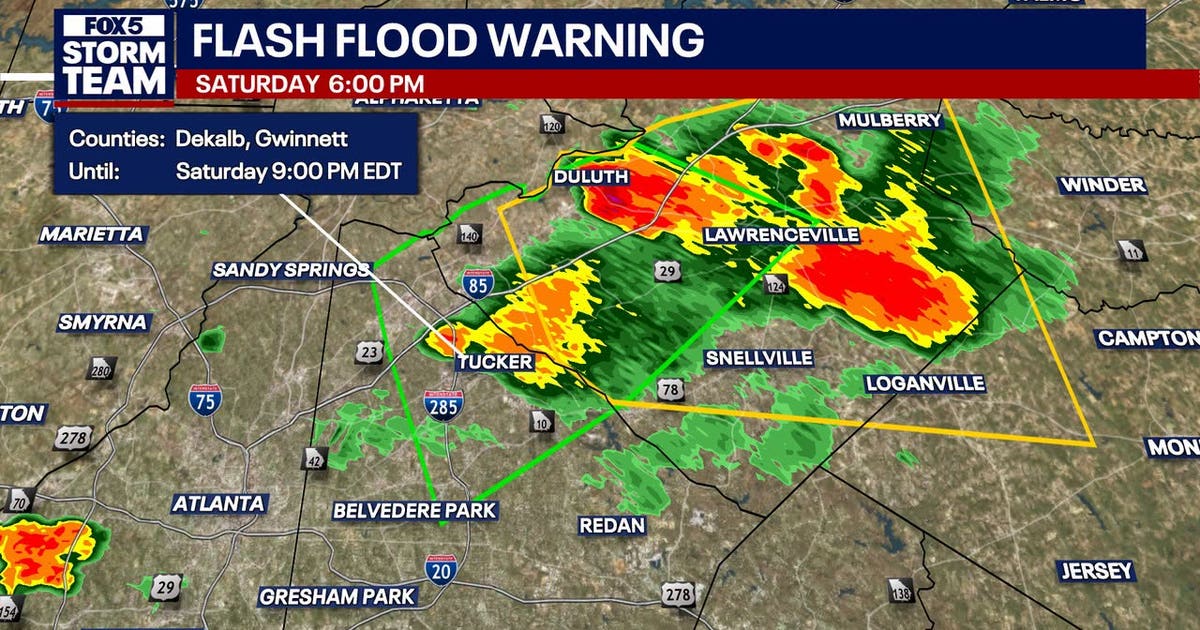
Severe, slow-moving thunderstorms triggered flash flood and severe storm warnings across metro Atlanta counties on July 4, 2026, with Gwinnett and DeKalb under a flash flood alert until 9 p.m. EDT. Atlanta weather hazards included 60 mph winds, quarter-size hail, FAA ground stops at Hartsfield-Jackson, and a heat advisory with indexes near 105 degrees. The National Weather Service said a nearly stationary cell over Tucker could prolong damaging conditions.
Key Takeaways
- The NWS issued a flash flood warning for Gwinnett and DeKalb counties until 9 p.m. EDT Saturday, alongside a severe thunderstorm warning for DeKalb, Gwinnett, Barrow, and Walton.
- Radar showed a nearly stationary storm capable of 60 mph wind gusts and quarter-sized hail over Tucker, threatening roofs, trees, and vehicles.
- The FAA ordered a ground stop at Hartsfield-Jackson Atlanta International Airport during thunderstorms, with FlightAware reporting widespread arrival and departure delays.
- A heat advisory ran from noon to 8 p.m. Saturday across much of north Georgia, with heat index values up to 105 degrees despite storm chances.
- More scattered storms and mid- to upper-90s heat were forecast for Sunday and into the early week.
What triggered the flash flood warnings?
The National Weather Service in Peachtree City issued a severe thunderstorm warning until 6:15 p.m. Saturday. At 5:27 p.m., radar tracked a severe thunderstorm directly over Tucker, near Peachtree Corners. Forecasters said the cell was nearly stationary, bringing prolonged intense weather rather than a fast-moving line.
The storm packed 60 mph wind gusts and quarter-sized hail. Damaging winds were expected to hit roofs, siding, and trees, while hail threatened vehicles across central DeKalb, Gwinnett, west-central Barrow, and northwestern Walton counties.
A flash flood warning followed for Gwinnett and DeKalb counties, remaining in effect until 9 p.m. EDT Saturday. Slow-moving storms over urban corridors can overwhelm drainage quickly, which is why forecasters escalated beyond a standard thunderstorm alert.
How did storms disrupt Atlanta airport travel?
The Federal Aviation Administration issued a ground stop for Hartsfield-Jackson Atlanta International Airport as thunderstorms swept across the metro area. The restriction was initially set to expire around 4 p.m. but was extended to 5 p.m., with authorities noting it could be extended again as cells developed.
Data from FlightAware showed 258 arriving flights—nearly 22%—delayed in the 24-hour window, with average departure delays of about 90 minutes as of 3 p.m. Ground stops halt inbound departures until conditions improve, reducing airborne holding over one of the world's busiest hubs.
Why is heat still part of the Atlanta weather story?
While storms grabbed headlines, the holiday weekend heat was equally dangerous. WSB-TV reported a heat advisory from noon to 8 p.m. Saturday for much of north Georgia, with heat index values expected to climb as high as 105 degrees.
Severe Weather Team 2 Meteorologist Eboni Deon noted that isolated showers and thunderstorms could develop during afternoon and evening hours, offering only brief relief. Highs in the mid- to upper 90s were forecast for Sunday with more scattered storms, and warm conditions with daily storm chances were expected Monday through Wednesday.
Where does forecasting technology fit in?
Modern radar tracking and FAA traffic-management systems helped authorities issue layered warnings—from severe thunderstorm and flash flood alerts to airport ground stops—within minutes of dangerous cells forming. For more on how data-driven tools are changing public safety, explore our Future Tech & AI Wonders coverage.
Residents should continue monitoring official updates from the National Weather Service and local outlets as scattered storms remain possible through the week.