How Annie Andrews flipped South Carolina's red Senate seat
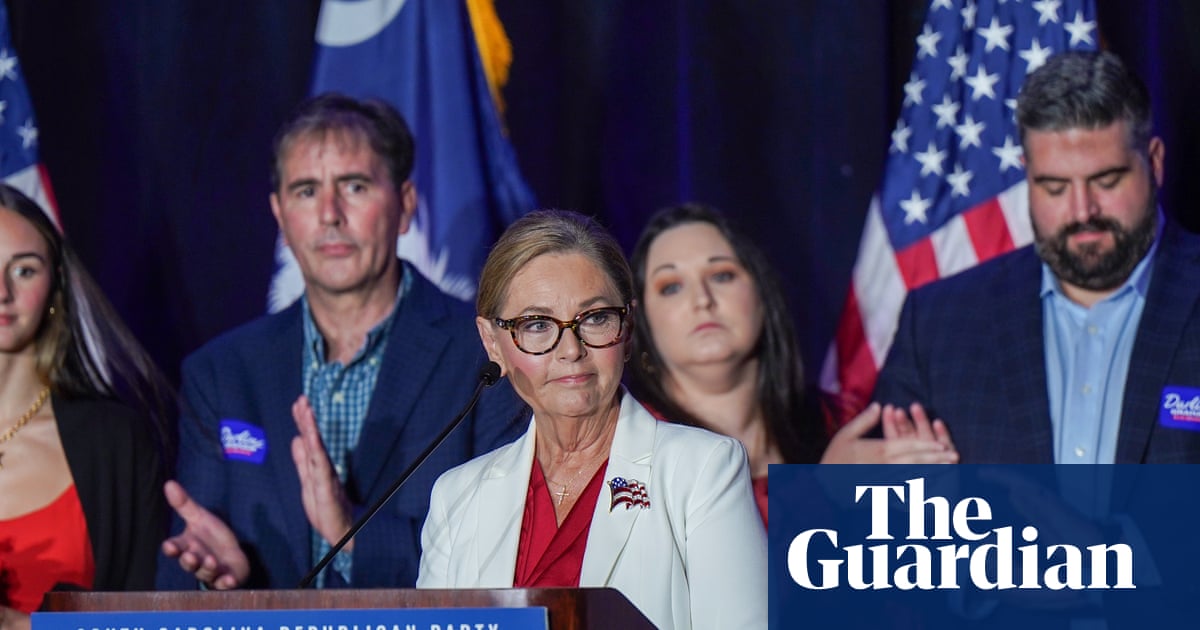
Democrat Annie Andrews flipped South Carolina's U.S. Senate seat after defeating Republican Darline Graham by about five points, ending GOP control of the seat held since 1998. Analysts cite massive Republican midterm dropoff, Graham's weak fundraising and candidate stumbles, and stronger-than-expected Democratic turnout—not a sudden leftward shift in the state.
Key Takeaways
- Annie Andrews won with 1,042,362 votes (51.1%) to Darline Graham's 951,165 (46.7%), flipping a seat Republicans had held since 1998.
- About 400,000 of 500,000 midterm no-shows versus 2024 were Republicans, while more Black and Democratic-leaning voters turned out than expected.
- Graham, Lindsey Graham's sister and a first-time candidate, raised only $1.9m against Andrews's $24.2m after a late primary finish.
- Statewide offices still went Republican; leaders say the result was a rejection of the alternative more than a blue realignment.
- Asked about backing Chuck Schumer as majority leader, senator-elect Annie Andrews said "it's time for a generational change."
What actually happened in South Carolina's Senate race?
In a result that stunned a deep-red state, Democrat Annie Andrews defeated appointed Republican Sen. Darline Graham in the 2026 midterms. According to The Guardian's reporting, Andrews took 51.1% to Graham's 46.7%—a comfortable five-point margin in a race few expected Democrats to win.
The seat had been held by the late Republican senator Lindsey Graham until his sudden death in July. Governor Henry McMaster appointed Darline Graham, Lindsey's younger sister and a political novice, to finish the term. President Donald Trump publicly urged her to run, reshaping a contentious GOP primary.
Republicans had controlled the seat since 1998. Andrews's win ends that streak and hands Democrats a high-profile pickup in a state that still backed other Republicans up and down the ballot.
Why did Republican turnout collapse while Democrats showed up?
Tyson Grinstead, Republican national committeeman for South Carolina, pointed to one defining statistic: from 2024 to 2026, about 500,000 people who voted in the presidential election did not return for the midterm—and roughly 400,000 of them were Republicans.
Midterms usually see lower turnout than presidential years, and South Carolina's dropoff is often larger. This cycle, Grinstead said, more Black voters and other traditionally Democratic groups showed up than would otherwise be expected, while more Republicans stayed home.
"The story of the night isn't that South Carolina is getting materially bluer; it's that we weren't able to turn out the statewide vote we normally do," Grinstead told The Guardian. Other results support that reading: voters still elected a Republican governor, lieutenant governor, secretary of state, treasurer, attorney general, and other statewide offices by similar margins.
State Senate Majority Leader Shane Massey put it bluntly: South Carolinians "remain a conservative lot," but many were "upset with how some elected officials handled their work." He argued Andrews's win should not be read as broad ideological support for her platform so much as "a rejection of the alternative and a desire to send a message."
How did Darline Graham's campaign unravel so quickly?
Graham entered the general election as a first-time candidate after a chaotic sprint primary. Massey said the nominee was selected in mid-September, leaving her only six or seven weeks to run—far less runway than nominees elsewhere. Lindsey Graham had also spent most of his campaign funds in the primary, assuming he could raise more later.
Money made the gap stark. Annie Andrews raised $24.2m; Graham raised only $1.9m. National Democratic donors helped Andrews flood the airwaves. South Carolina had seen big ad spends before—Jaime Harrison poured about $130m into a 2020 challenge to Lindsey Graham and still lost by 10 points—but this time there was no Lindsey Graham to raise money or define the race.
Graham's own words hurt. In an August primary debate against U.S. Rep. Ralph Norman, she said "national security is not my thing" and "I'm not that informed on national security." Norman later fueled a low-key write-in effort and, according to GOP commentator Randal Wallace, called her a fraud and signaled activists not to help—leaving party activists bitter.
As the race tightened, aides limited her press access and pulled her from the spin room after her sole general-election debate with Andrews. Some voters said she felt selected for them. Shane Brown, a typical Republican voter who sat out the race after nonstop ads, compared it to feeling Kamala Harris had been "forced" in 2024: "They selected her. The powers that be said: 'This is the person you guys get to vote for.'"
Local dynamics amplified the swing. Berkeley County backed Trump by about 16 points in 2024 but gave Andrews a nine-point win in 2026—a roughly 26-point shift. The open House race to replace Nancy Mace, won by retired admiral Nancy Lacore after her firing by Defense Secretary Pete Hegseth, also boosted Democratic turnout across the 1st Congressional District.
Cost-of-living frustration surfaced too. Derek Rosado, loading groceries in Moncks Corner, called Andrews's win "delightfully surprising" and said prices and overseas spending needed to change—concerns that sit alongside the household money themes we track in Wealth Hacks & Passive Income.
What has Annie Andrews said about Senate leadership next?
On Fox News's Special Report, Sen.-elect Dr. Annie Andrews discussed her priorities and her race against Graham. Asked whether she would back Chuck Schumer as majority leader, she replied that "it's time for a generational change."
For Republicans, the postmortem is already underway: how to rebuild turnout, mend primary wounds, and avoid fielding candidates voters see as hand-picked. For Democrats, Annie Andrews's upset offers a rare foothold in fireball-red South Carolina—won less by converting conservatives wholesale than by showing up when the other side stayed home.